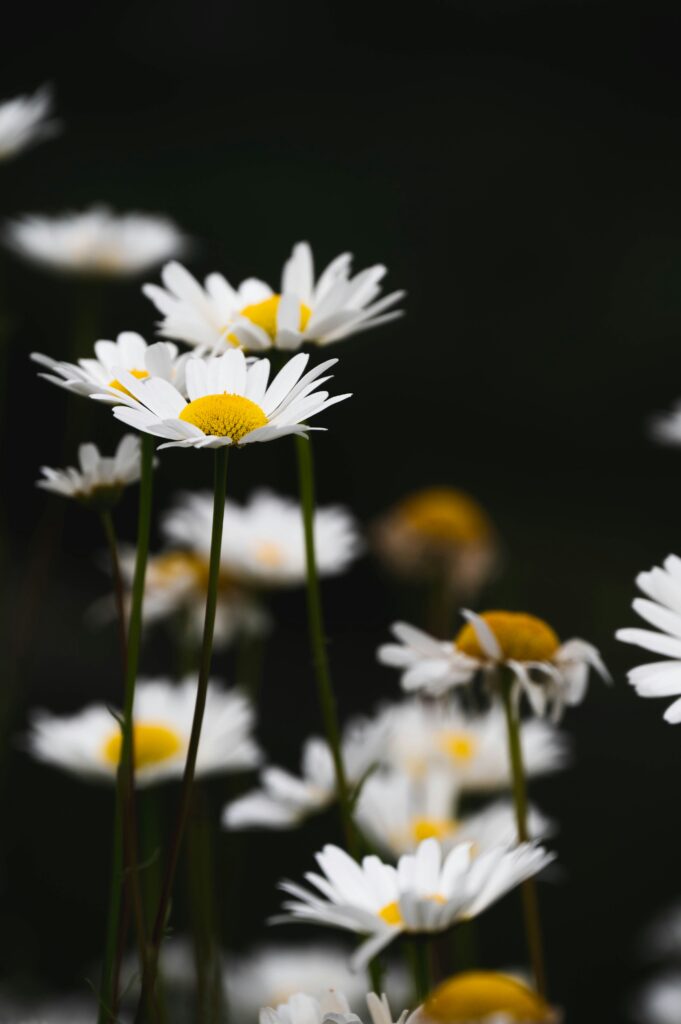
Along roadsides and field edges across Denmark, from midsummer into autumn, you may notice a tall, wiry plant with flowers of an extraordinary sky blue. They open with the morning and close again by early afternoon. This is chicory, Cichorium intybus, one of Europe’s most familiar wild plants.
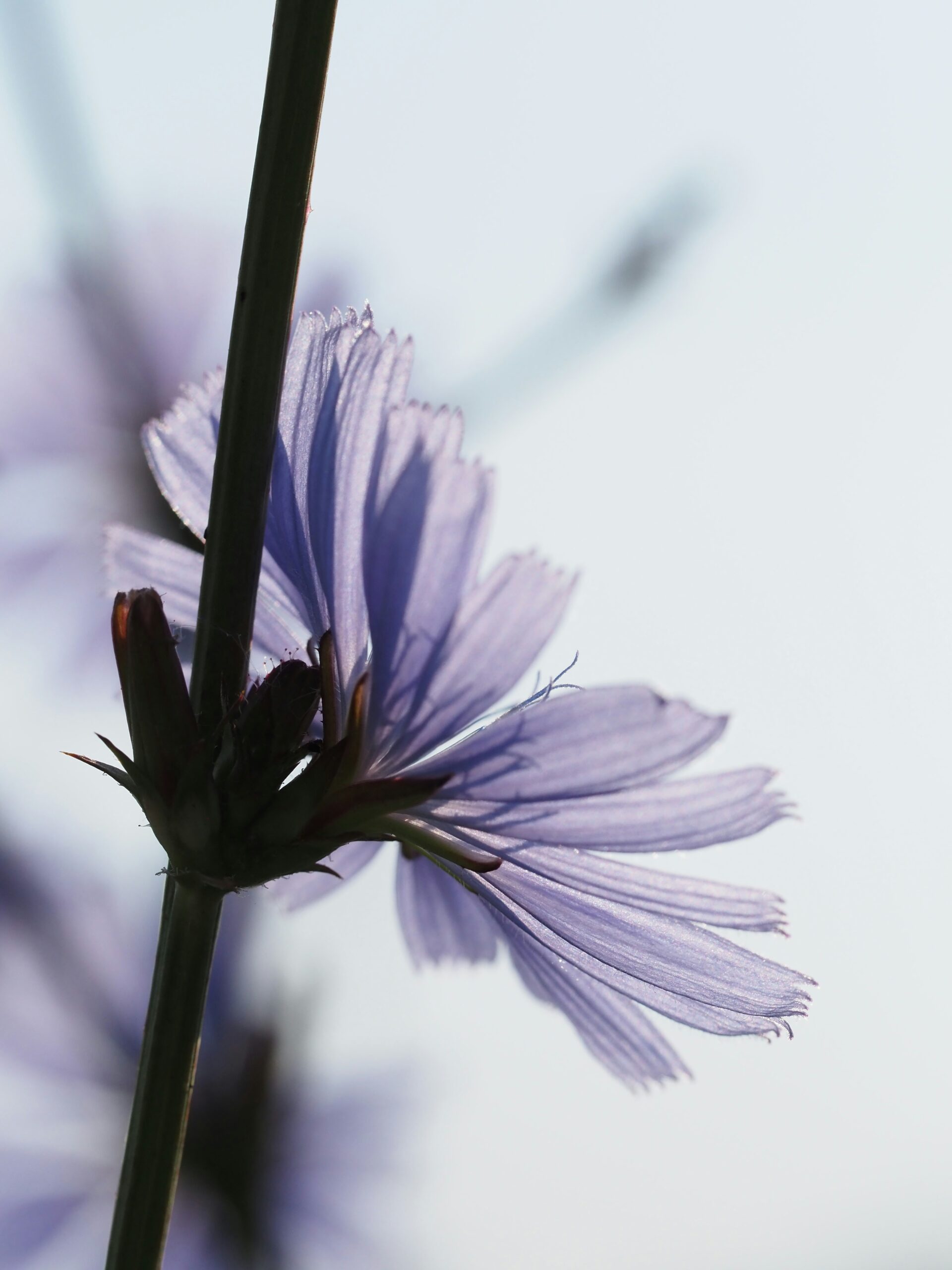
Along roadsides and field edges across Denmark, from midsummer into autumn, you may notice a tall, wiry plant with flowers of an extraordinary sky blue. They open with the morning and close again by early afternoon. This is chicory, Cichorium intybus, one of Europe’s most familiar wild plants.
Its beauty is above ground, but its gift for skincare lies below, in a long, pale root that stores a special kind of sugar called inulin. That sugar is food, not for us, but for the friendly microbes that live on our skin.
A humble root with a long history
Chicory has been gathered and grown in Europe for centuries. Its bitter leaves have long been eaten as salad greens, and its blue flowers were so punctual that the Swedish botanist Carl Linnaeus included chicory in his famous “flower clock”, a garden designed to tell the time by which flowers were open.
The root found its own fame. Roasted and ground, it became a popular coffee substitute in Europe, especially when real coffee was scarce or expensive, and it is still blended into coffee in parts of France and Belgium. In Belgium, chicory roots grown in the dark gave rise to the pale, tightly packed heads known as witloof, or Belgian endive.
The discovery of inulin
In 1804, the German pharmacist Valentin Rose was studying the roots of elecampane, Inula helenium, when he boiled them in water and found a white, powdery substance that resembled starch but behaved differently. It was later named inulin, after the plant in which it was first found.
Inulin turned out to be common in nature. It is found in more than 36,000 plant species, including onions, garlic, asparagus, dandelion and Jerusalem artichoke. Many plants use it to store energy and to help them survive cold and drought. Chicory root is one of the richest sources, and today it is the main source of the inulin used in food and cosmetics. The process is much like making sugar from sugar beets: the roots are sliced and washed, the inulin is drawn out with hot water, and then it is purified and dried.
What lives inside
Inulin is a fibre made of chains of fructose, the sugar found in fruit, usually with a single glucose at one end. The chains vary in length, from a few sugar units to several dozen. Because of the way the sugars are linked, our own enzymes cannot easily break them down, but many beneficial microbes can. That is what makes inulin a prebiotic: food that is used selectively by helpful microorganisms.
Form | Chain length | Typical use |
|---|---|---|
Long-chain inulin | Longer chains of fructose | Leave-on products; forms a soft, moisturising film on the skin |
Short-chain inulin (fructo-oligosaccharides) | Short chains, under about 10 units | Cleansers and lighter formulas; dissolves easily |
Chicory root extract | A whole extract of the root | Contains inulin together with other root compounds |
In water, inulin also forms a light, creamy gel. In skincare, this gives formulas a soft, comfortable feel and helps them hold moisture.
What it does for skin
Food for the friendly microbes. The idea behind inulin in skincare is simple: offer the skin’s helpful residents something they like to eat, and they are more likely to thrive. In laboratory studies, inulin has supported the growth of Staphylococcus epidermidis, one of the skin’s most useful residents, while doing little to help, or even holding back, less welcome bacteria such as Staphylococcus aureus.
Early studies on real skin. In 2024, Mussi and colleagues in Brazil tested a gentle cleansing water with 3% inulin and xylitol on 15 volunteers. After cleansing, the skin carried more Staphylococcus epidermidis and less Staphylococcus aureus. In another open study presented by the dermatologist Marius Anton Ionescu, 80 women living in polluted cities used a lotion containing inulin together with copper and zinc for three weeks. Their skin looked better, and samples showed more of the skin’s beneficial bacteria.
Hydration. Inulin holds water and forms a light film on the skin, which helps it feel soft and moisturised.
What this means
Inulin is one of the best-known prebiotics in skincare, and its gentle, supportive role fits well with what we know about the skin’s microbiome. But the evidence is still early. The human studies are small, they tested inulin together with other ingredients rather than on its own, and several were carried out by the companies that make the products. Inulin is not an antibacterial and does not “fix” the microbiome. At best, it gently encourages the skin’s own good residents.
Finding it on a label
On an ingredient list, look for:
- Inulin: purified inulin, most often from chicory root.
- Cichorium Intybus (Chicory) Root Extract: an extract of the whole root, which contains inulin among other compounds.
- Alpha-Glucan Oligosaccharide: a different plant-based prebiotic sugar, often used alongside inulin.
Inulin is usually used at low levels, often around 1% to 3%, in water-based products such as essences, mists, toners, cleansers and serums. It is gentle and well tolerated by most skin types, and it is plant-based and suitable for vegan skincare.
A gift from the wayside
There is something fitting about a plant of the roadside and field edge offering food to the skin’s own small ecosystem. Chicory asks for very little, grows almost anywhere, and quietly stores its sugars underground for the season ahead.
That is why we chose chicory inulin for The Guardian, our fermented essence. Alongside fermented botanicals and spirulina, it is there to gently nourish the skin’s friendly microbes and support the skin’s natural balance, as the calm, hydrating first step of your routine.
Sources
- Mussi L, et al. Effects of prebiotic micellar solution on makeup removal and skin microbiome balance. Journal of Cosmetic Science, 2024;75(6):553–564.
- Ionescu MA. Skin and pollution: topical prebiotics and microbiome protection. IMCAS Academy presentation.
- Erbul BT, Orhan S, Saka B. Formulation of mild shampoos and investigation of possible prebiotic effects. Journal of Immunology and Clinical Microbiology, 2023;8(4):100–105.
- Gibson GR, et al. The ISAPP consensus statement on the definition and scope of prebiotics. Nature Reviews Gastroenterology & Hepatology, 2017.
- Wikipedia. Inulin, history and production.